

Carrick says he loves United, but his job after loss is shaky

Share
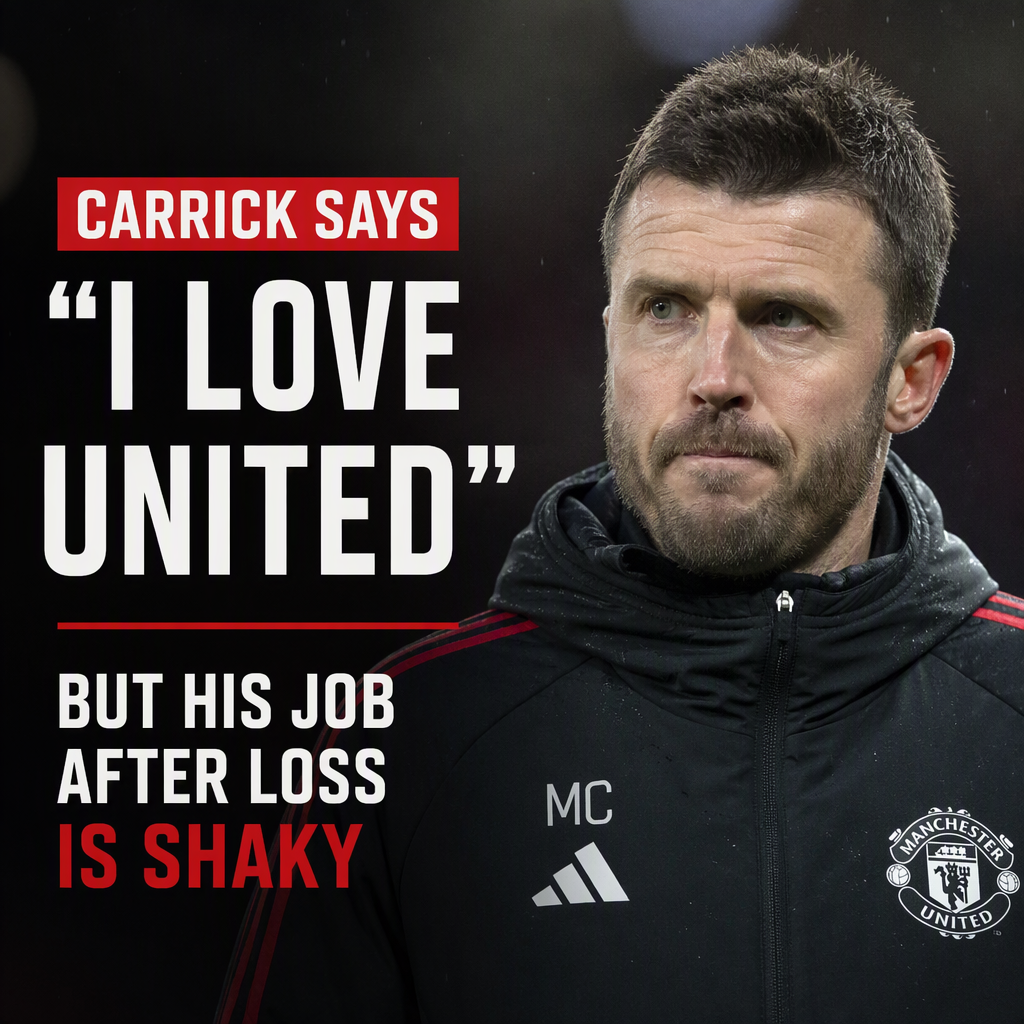
📸❌ AI illustration, not a game photo
⚽ Love Won’t Save Jobs
Michael Carrick is out here professing his love for Manchester United, but love doesn’t win matches and it definitely doesn’t save jobs in elite football. This is a business that chews up sentiment and spits out contracts, if you don’t deliver results, someone else will. The game doesn’t wait.
Scoreboard Shade 🧾
They love you until the scoreboard doesn’t; Carrick’s United tenure might be heading for halftime without a second half.
🔄 United’s Endless Cycle
Michael Carrick’s love for Manchester United might be genuine, but love doesn’t pay the bills, or keep you in the job when the team keeps catching L’s. After United’s humiliating loss to Bournemouth, Carrick is looking like he’s about to join the long list of managers chewed up and spat out by the machine at Old Trafford. Let’s be clear though: this isn’t really about Carrick. It’s about a club that’s been chasing the ghost of its glory days for over a decade without ever really addressing why those days ended.
United fans have been sold a fantasy for years. They’re told that every new manager is the guy to restore the empire, every new player is the one to bring back that swagger. Carrick’s just the latest face in this revolving door of coaches who inherit a broken structure and get blamed when it doesn’t magically fix itself. The truth is, Old Trafford isn’t just dealing with a coaching problem, it’s dealing with a power problem. It’s a club run more like a brand than a football institution. Executives obsessed with sponsorship deals and social media metrics have been steering the ship, while the actual football side of things has been neglected, mismanaged, and outright fumbled.
Now, Carrick’s not innocent in all this. He’s been part of the system for years, a loyal servant as a player and then as a coach. But being an insider doesn’t mean you’re equipped to lead, especially when you’re being handed a team that’s built more for vibes than for victories. The squad itself is a patchwork of past-their-prime stars, overpriced transfers, and young players who’ve been thrown into the deep end with little guidance. You can’t polish a mess like that in a few weeks, no matter how much you “love” the badge.
And let’s talk about what “loving United” even means here. For Black folks watching sports, we know this song. How many times have we seen loyalty weaponized against us?
The truth is, Old Trafford isn’t just dealing with a coaching problem, it’s dealing with a power problem.
How often are workers asked to ride for the institution harder than the institution rides for them? Carrick’s love for the club might be sincere, but it’s also irrelevant. His bosses don’t care about that. They care about results, and when the results aren’t there, they’ll show him the door just like they’ve done to everyone else since Ferguson retired.
So what does this mean for us, for the people watching from the sidelines? It’s a reminder to look past the headlines and see the system at work. United isn’t failing because of one manager, one loss, or even one bad season. It’s failing because it hasn’t reckoned with the way modern football works. The globalized money game has turned clubs into corporations, and corporations don’t care about roots, history, or community. They care about profits. Until United starts prioritizing the actual sport over the branding, they’ll keep recycling managers, churning through players, and disappointing fans who still believe in the magic.
For Carrick, this might be the end of his chapter at Old Trafford, but it’s not the end of the cycle. Somebody else will step in, give the same “proud to be here” speech, and eventually get the same pink slip. The real issue isn’t who’s sitting in the manager’s chair, it’s who’s sitting at the top. Until the suits stop treating football like a marketing campaign, United will remain a shadow of its former self. For those of us who know what it’s like to love something that doesn’t love you back, this story feels all too familiar. Carrick might love United, but love isn’t enough to fix a broken system.
📐 Bench Power Dynamics
Managers like Carrick face public scrutiny after losses, but Black players and coaches often face career-ending blame under the same conditions. The pipeline for Black leadership in soccer remains fragile, and accountability at the ownership level is rarely asked when clubs underperform. Who controls the bench controls the narrative.