


Getty’s digging through HBCU archives to unearth lost Black sports history

Share
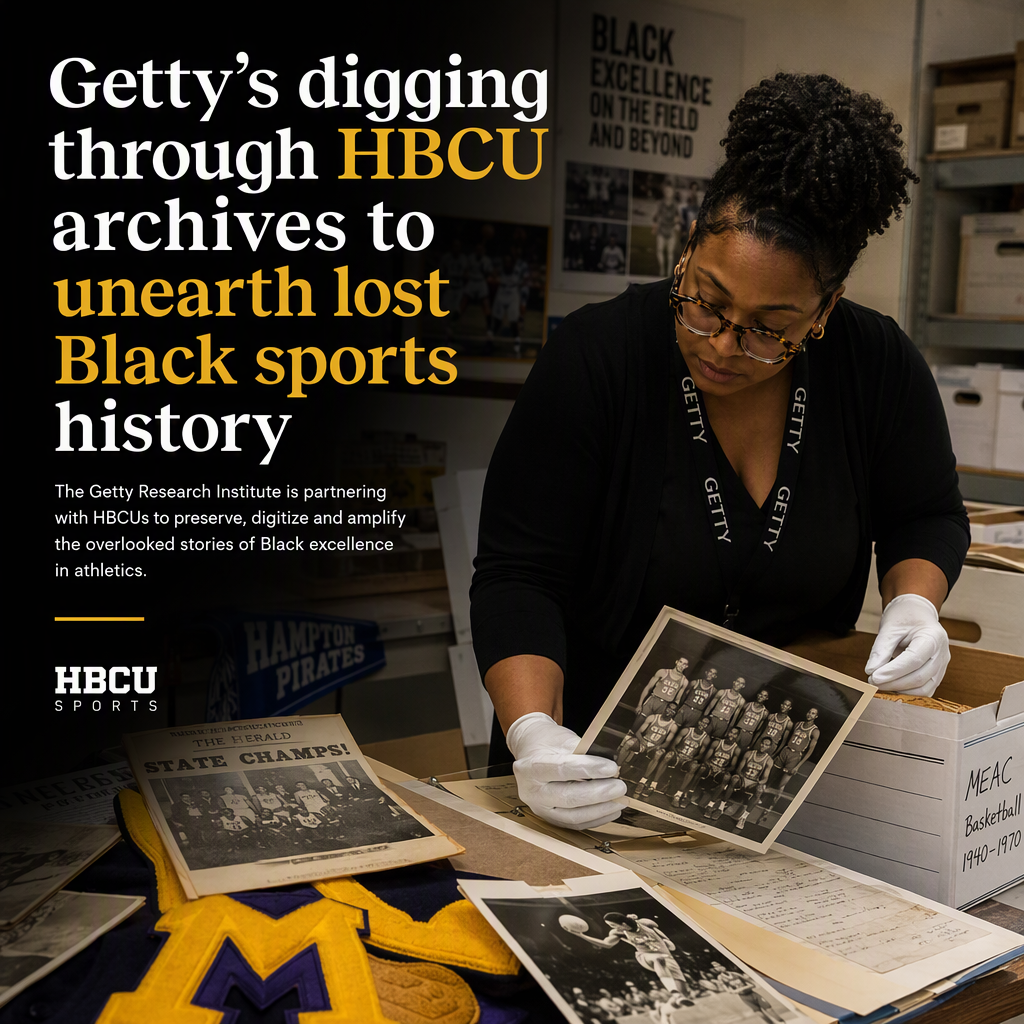
📸❌ AI illustration, not a game photo
🔎 Whose Archives, Whose Gain?
Getty digging through HBCU archives might sound like cultural preservation, but what’s the economic split? Black history has been monetized for centuries without the rightful owners seeing a dime. If this project isn’t funding HBCUs and guaranteeing ownership stays with them, it’s just another extraction dressed in nostalgia.
🔎 Unearthing Our Narrative
It’s always fascinating to see the word “lost” attached to Black history, like it was some set of keys we misplaced under the couch. Truth is, our stories weren’t lost. They were ignored, erased or left buried in basements. Now Getty Images, a company that built its name profiting off the global circulation of pictures, wants credit for pulling out the shoeboxes at HBCUs and dusting off our past. The project to digitize archival images from historically Black colleges and universities sounds noble on paper. But before we celebrate, let’s ask ourselves: who benefits from this excavation? And more importantly, who controls the narrative once these photos hit the internet?
Take the Florida A&M image of Muhammad Ali at a 1980 football game. That’s a big find. It’s the kind of moment that reminds us how HBCU sports, at their peak, were cultural hubs. People didn’t just come for the game, they came for the energy, the excellence, the community. Ali showing up wasn’t just a random pop-in. It was a reflection of how HBCU sports were deeply tied to Black life and legacy, attracting icons who understood what these institutions represented. But that photo wasn’t “discovered” because someone cared about preserving Black history. It sat untouched in an archive because no one with power ever prioritized it. Now that Getty’s involved, suddenly it has value? Let’s call that what it is: exploitation dressed up as preservation.
HBCUs have been underfunded and overlooked for generations, forced to do more with less while still producing the best of the best. Their archives, just like their athletic programs, were neglected not by accident but by design. So when a company like Getty swoops in with digitization projects, it’s worth asking if this is just another instance of outsiders extracting something they didn’t build. Getty can talk all day about collaboration and respect for the schools, but the bottom line is this: they’re a for-profit corporation turning Black memories into searchable data.
HBCUs have been underfunded and overlooked for generations, forced to do more with less while still producing the best of the best. Their archives, just like their athletic programs, were neglected not by accident but by design. So when a company like Getty swoops in with digitization projects, it’s worth asking if this is just another instance of outsiders extracting something they didn’t build.
Are the schools getting their fair cut of that? Who decides how these images are used? And will the people in those photos even recognize themselves in the story Getty chooses to tell?
This isn’t just about nostalgia for football games or halftime shows. It’s about how Black culture gets commodified, even in spaces we thought were ours. HBCU sports aren’t just a piece of history, they’re a testament to resilience and brilliance in a system that tried to shut us out. They represent self-reliance, not just athletics. So if Getty wants to act like a steward of this legacy, they need to do more than drop some glossy press releases and scan negatives. They need to invest directly in these schools, like paying archivists their worth, building state-of-the-art facilities or funding scholarships for sports programs. If you’re going to mine history, put something back in the ground.
What happens next matters most. Once these images are digitized, who’s responsible for telling the story behind them? Because a photo out of context can be a tool of distortion. You can’t talk about HBCU sports without talking about segregation, systemic inequality and how these schools made magic despite it all. That’s not just sports history, it’s American history. And it deserves to be told by the people who lived it, not filtered through Getty’s corporate lens.
So here’s the so what: this project could be monumental, but only if it’s done on the terms of the schools, the communities and the people who own these memories. Black stories, especially ones connected to our institutions, aren’t charity cases. They’re intellectual property. And they deserve the same respect Muhammad Ali gave that FAMU crowd in 1980. Anything less is just another hustle, repackaging our greatness for someone else’s gain.
Legacy Mining 🪞
Call it what it is: a license to profit from our legacy, with a sprinkle of archival guilt for flavor.
🔑 Legacy Needs Ownership
HBCUs need funding and control over their historical assets, not corporate partnerships that leave them culturally rich but financially starved.